Finding Belantih
Our relationship centres on Belantih Coffee Farm, high in the hills of Bali, where the volcanic soil and the altitude do a lot of the hard work that machines can't replicate. It's a family-run operation, the kind where the person who picks the cherries and the person who decides how they're processed are often the same person, or a close relative of theirs.
At the centre of that farm is Mr Wayan — a producer, a friend, and honestly one of the nicest people in the industry. Farm visits with him rarely go the way we plan them. We arrive with questions about processing methods and leave three hours later having talked about family, weather patterns, and why this year's harvest tastes different from last year's. That's not a detour from the coffee. That is the coffee.
Why this matters more than a nice label
Here's the part that's easy to skip past: direct trade isn't just a nicer story to put on a bag. It changes outcomes.
When a farmer knows exactly who's buying their coffee and why, and knows the relationship isn't going anywhere, they can invest differently. They can hold back the best of a harvest for careful processing instead of rushing it to market. They can pass premium pricing straight to the people doing the work, rather than watching it get absorbed by three layers of middlemen along the way. Over time, that builds something a single good harvest can't: a farm and a business that are genuinely stable enough to keep improving.
For us, it means every bag of Belantih coffee we sell isn't a transaction with an anonymous supply chain. It's a continuation of a specific relationship with a specific farm, at a specific point in Bali, that we could point to on a map if you asked us to.
What this means for you, the person drinking it
You might be wondering what any of this has to do with the cup in front of you. Fair question.
It means the coffee you're drinking has a name attached to it, not just a country. It means someone got paid fairly for growing it, not just competitively. And it means when we tell you a story about freshness, or process, or flavour, we're not repeating something from a spec sheet — we're repeating something we heard directly, standing in the place it happened.
We don't think that makes us better than anyone else in coffee. We think it makes us accountable in a way that's harder to fake. When you can't hide behind a broker or a blend, you have to actually stand behind what you're selling.
Where this is going
This is the first in a series where we're going to pull back the curtain a bit more — on the farm itself, on the framework we've helped build across the region to talk about coffee without hiding behind numbers, and on how all of this actually turns into the coffee that shows up at your door.
For now, the short version is this: we didn't go direct because it was efficient. We went direct because it was the only way to actually know what we were putting in your cup — and who made it possible.
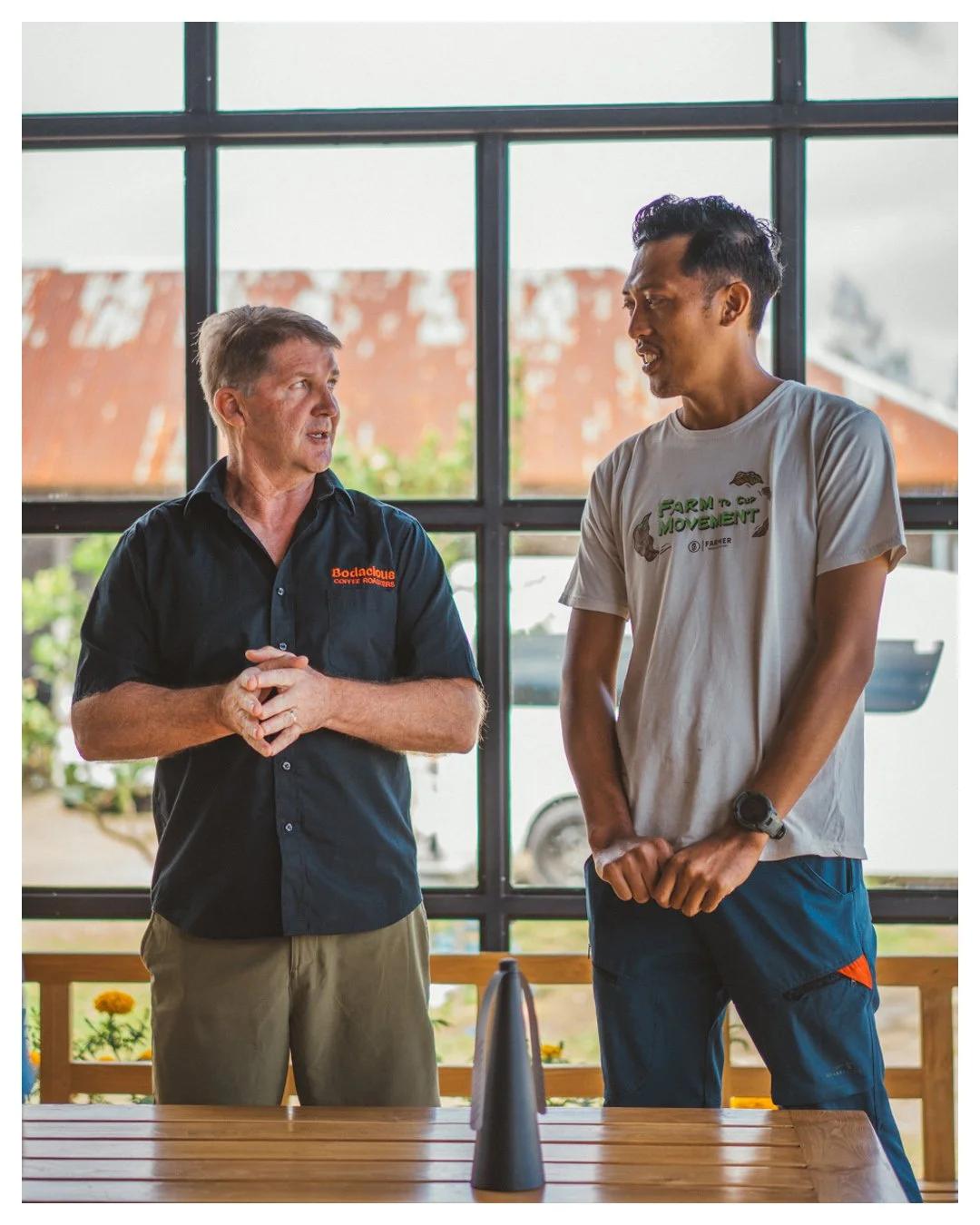
Discussing our long term partnership between myself and Belantih Coffee Farm (Pak Wayan Wijaya - farm owner)